
Meet the makers cultivating and crafting excellence from farm to glass
By Stasia Brewczynski
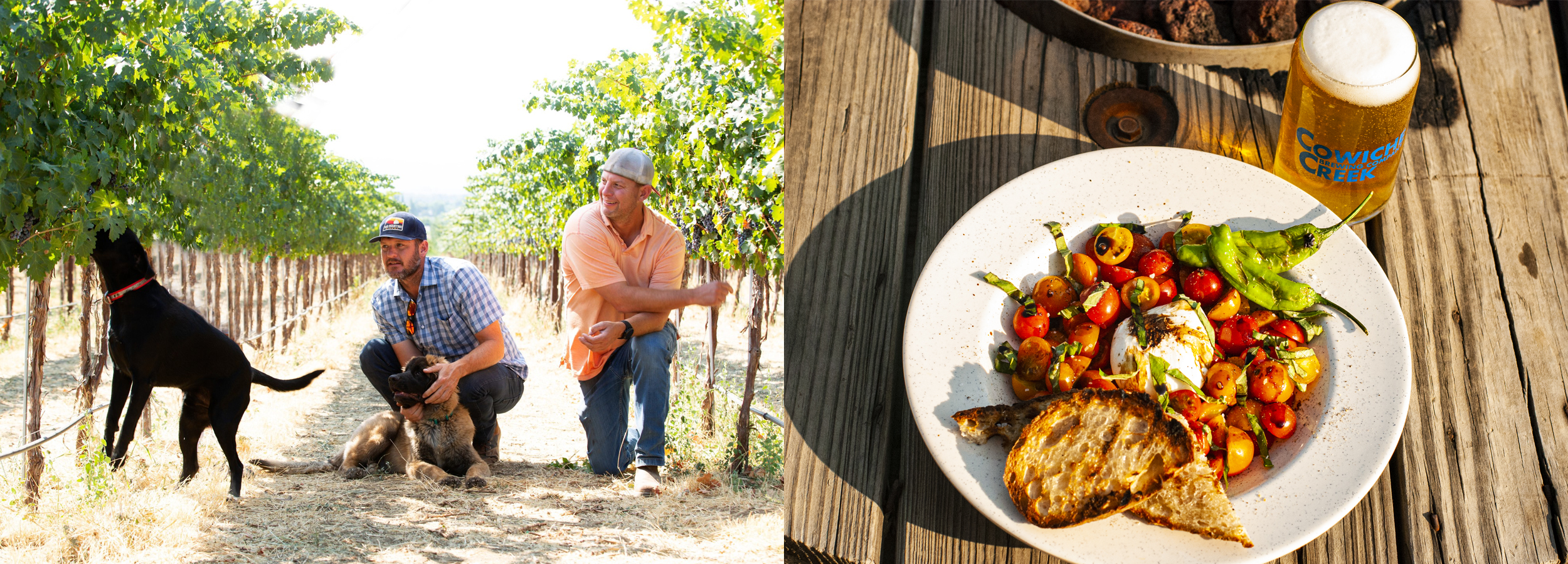
In the Yakima Valley, so often the makers are also the stewards of the land. This close connection between cultivation and craft means visitors can experience a sense of place rarely so distilled. Come to the source and experience a generation of producers putting Yakima agriculture in the glass and on the plate.
Agriculture at Your Backdoor
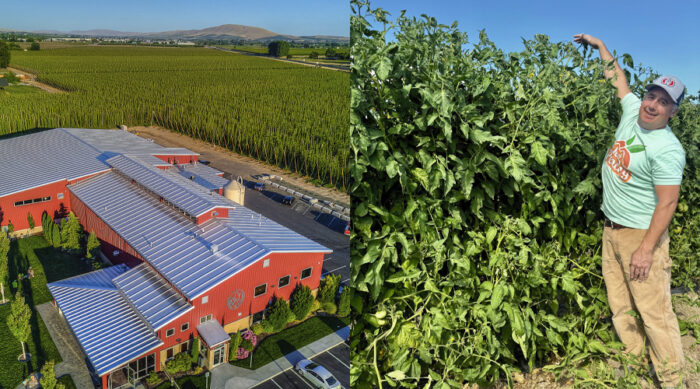
Overlooking expansive views, Cowiche Creek Brewing Company sits on a 40-acre farm run by third-generation farmers, the husband-and-wife team of Derrick and Maria Nordberg. What started as a post-harvest homebrewing lark — debuting at Yakima’s iconic Fresh Hop Ale Festival in 2016 — has grown into a thriving passion-led business, with the Nordberg’s hard work earning them accolades among the best beermakers in the region. In 2025, for example, Cowiche Creek Brewing’s wet-hop IPA GROWN4U — loaded with 400 pounds of fresh Simcoe hops from Loftus Ranches’ Tributary Hop Farms — took home first place in the competitive IPA category at Fresh Hop Ale Fest. “We feel so fortunate to live in the Yakima Valley and have these hops farms right out our backdoor,” the Nordbergs say.
Even more directly outside the brewery’s backdoor is the taproom and restaurant’s kitchen garden, where the team cultivates five kinds of tomatoes and six types of peppers for dishes such as blistered shishitos, tomato–red pepper soup, and fresh salads topped with vibrant chimichurri dressing. Known especially for hearty in-house ground chuck and brisket burgers, Cowiche Creek Brewing attracts diners and drinkers looking for a taste of what connects Yakima’s food and beverage scene to its farmland.
A Farmer-First Approach
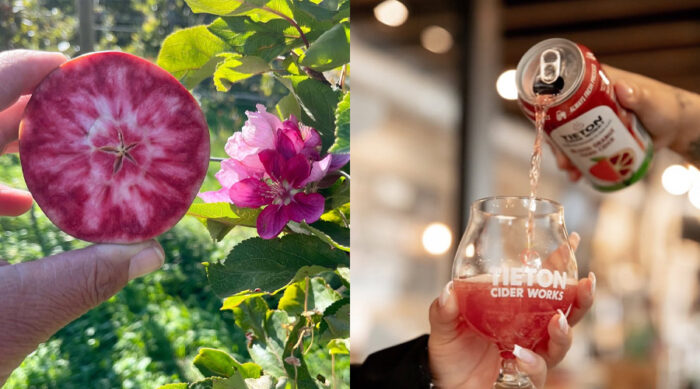
“As farmers first,” says Tieton Cider Works cidermaker and co-owner Marcus Robert, “we like to make cider that is reflective of [our] vocation.” Tieton grows Washington’s largest acreage of bittersharp and bittersweet apples along with other cider fruits, affectionately called Cider View. It’s a scenic route of over 15 acres on volcanic, andesite rock cliffs overlooking the Tieton and Naches river confluences, with large foothills across the way providing picturesque views of the Naches Valley.
Here, cider is part of the daily rhythm. “We’re not making cider one time a year, we’re making cider every day,” explains Robert. A truckload of fresh-picked apples — all grown within a 30-mile radius — arrives each morning for processing. Before the production team starts fermentation, the fruit is sorted, ground, and pressed into juice. Leftover pomace — the pulpy remains of apple pressing — goes to nearby cattle farms for the animals to enjoy.
The result of Tieton’s laborious orchard-to-glass approach is a diverse range of ciders — from dry and tannic to sweet and acidic — that visitors can sample in the tasting room. Over the bar, cider awards and farm photos reflecting many years of history are hung with pride. Outside, guests can enjoy beautiful weather playing bocce or cornhole or watching local bands play on a stage crafted not from just any wooden planks but from surplus apple bins — after all, this is a farm first, and creative reuse is a given.
Cultivating a Future of Farming
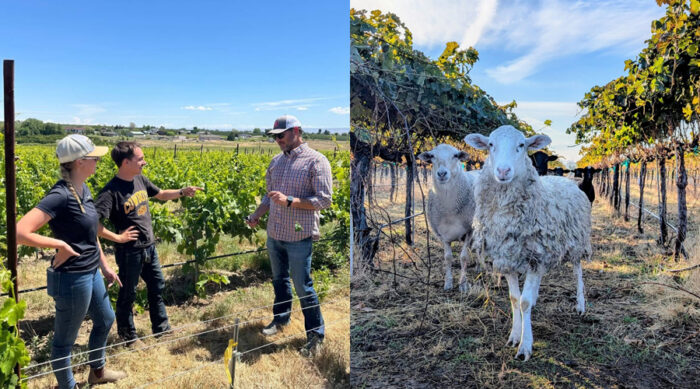
“The choices we make and how we care for this place is everything,” says Patrick Rawn, a fourth-generation farmer who co-owns Two Mountain Winery with his brother Matt. Their estate — named for Mount Rainier and Mount Adams, which overlook the vineyard — was the first in Washington to be Certified Green through LODI RULES Sustainable Winegrowing, a science-based program based in Lodi, California. Likewise, the vineyard’s first harvest was certified Salmon Safe and certified by Sustainable WA, a program built by multiple Washington wine organizations in partnership. During Sustainable WA’s development, Rawn served on the Farmer’s Committee, which was tasked with helping source funding and design a program that would stand the test of time.
Rawn attests that low-input farming focused on soil health develops high-productivity vines and, ultimately, high-quality wine. This means eschewing herbicides in favor of techniques like cultivating cover crops to protect vine roots and retain moisture; fostering an ecosystem of diverse and native plants, insects, and animals as a method of pest control; and employing grazing sheep to improve soil quality. This low-intervention, high-effort approach makes its way to Two Mountain’s cellar as well, where Rawns says a relatively hands-off method of 100% estate winemaking allows the liquid’s sense of place shine through. The result is ripe, integrated tannins, natural acidity, and elegant aromatics — Yakima Valley in a glass.
Categorized in: Uncategorized